
Introduction
When discussing Indonesia's cultural heritage, temples are at the top of the list! The most fascinating are undoubtedly the Hindu temples of Java. Not only are they majestic, but they also hold a rich history of the grandeur of the archipelago's Hindu kingdoms. Between the legends surrounding them, their impressive architecture, and the Hindu philosophy inscribed in their reliefs, these temples possess a unique charm.
If you're passionate about historical travel or simply curious to learn more about the past, exploring the Hindu temples of Java will be an unforgettable adventure. Let's discover these wonders together!
History of Hindu Temples in Java
Hinduism was once a dominant religion in Indonesia, particularly on the island of Java. Its influence is visible in numerous historical remains, including these magnificent temples that have stood the test of time. Powerful kingdoms such as Mataram, Kediri, and Majapahit left an indelible mark, notably through the construction of these impressive buildings.
A temple was not just a simple building. It served as a place of worship dedicated to Hindu deities, primarily Shiva, Vishnu, and Brahma. Furthermore, it represented royal power and was a spiritual center for the Hindu communities of the time.
History of Hindu Temples in Java
Upon closer observation, one notices that the Hindu temples of Java possess very distinct architectural characteristics. Generally, they are composed of three main parts:
- Bhurloka (Lower part) – Symbolizes the world of humans, filled with desires and passions.
- Bwahloka (Intermediate section) – Represents the spiritual journey towards enlightenment.
- Swarloka (Upper part) – Illustrates the celestial realm where the gods reside.
Hindu temples typically have a slender shape, inspired by Mount Meru in Hindu mythology, considered the home of the gods. The reliefs carved on their walls tell epic stories from the Ramayana and Mahabharata, adding a profound cultural and spiritual dimension.
The Most Famous Hindu Temples in Java
1. The Temple of Prambanan

Who hasn't heard of Prambanan Temple? It's the largest Hindu temple in Indonesia and is associated with the legend of Roro Jonggrang, who was supposedly transformed into a statue. Built in the 9th century by the Sanjaya dynasty of the Mataram kingdom, Prambanan is dedicated to the Trimurti: Brahma, Vishnu, and Shiva. Read also: Visit to the Prambanan Temple and its Surroundings
With its elegant architecture and detailed reliefs, the Prambanan temple is recognized as a UNESCO World Heritage Site. Today, it remains a major tourist attraction, particularly due to the nightly performance of the Ramayana ballet.
2. The Temple of Penataran

Located in Blitar, the Penataran temple is a remnant of the Majapahit Empire. What makes it special are its reliefs illustrating the epic Ramayana. Penataran was once a royal place of worship, where the rulers of Majapahit paid homage to Hindu deities. Read also: Exploring the Temples of Java
3. The Temples of Cetho and Sukuh
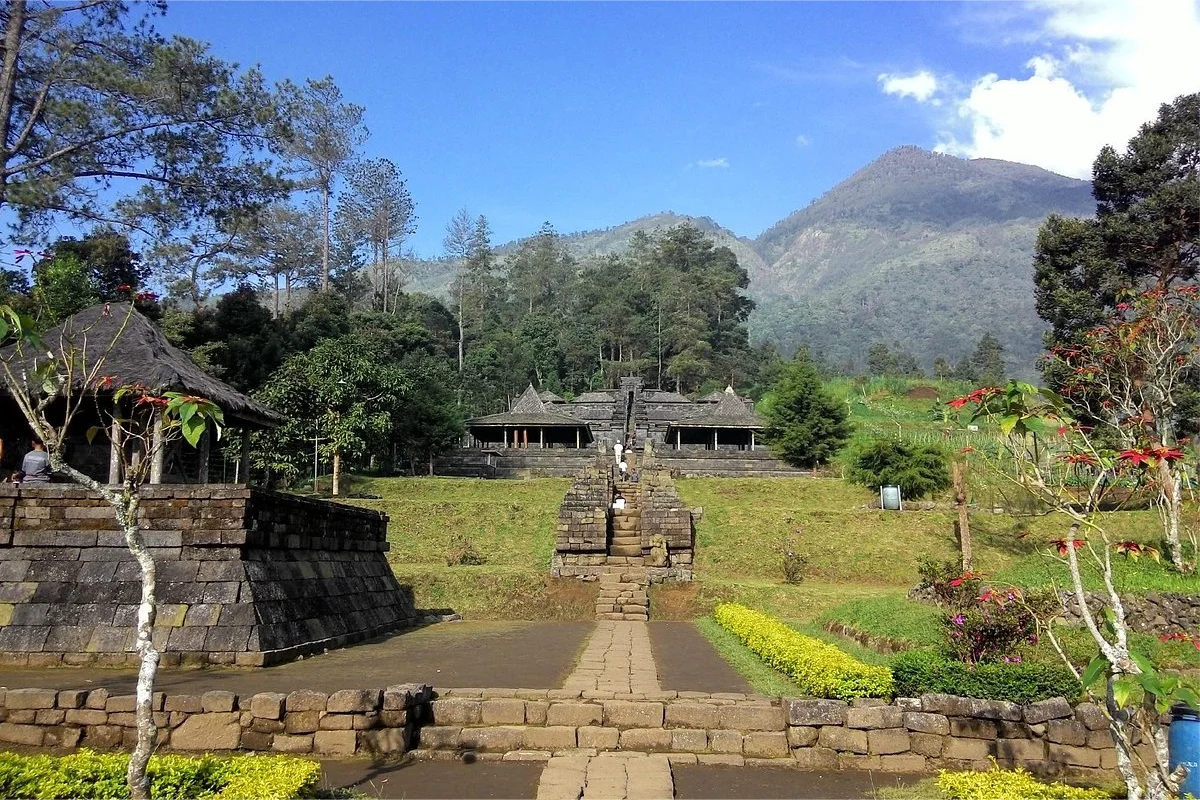
These two temples, located in Karanganyar, Central Java, possess a unique architecture, quite different from other Hindu temples. The Sukuh temple has a pyramidal shape reminiscent of the ruins of the Mayan civilization in America. As for the Cetho temple, perched at an altitude of 1,400 meters, it offers an impressively mystical atmosphere.
Function and Spiritual Significance
In addition to being places of worship, the Hindu temples of Java hold profound spiritual significance. Each relief and structure embodies Hindu teachings on life, death, and reincarnation. These temples also served as places of meditation and religious ceremonies for Hindu priests.
In Hindu belief, a temple is a symbolic replica of Mount Meru, the sacred abode of the gods. This is why many temples are built on hills or in mountainous regions, where a stronger spiritual connection with nature and the divine is felt.
Preservation and Challenges
Unfortunately, some temples have suffered from erosion, earthquakes, and vandalism. Preserving Java's Hindu temples presents a major challenge. Fortunately, numerous government and community initiatives have been implemented to restore and protect these historical sites.
As visitors, we can also contribute to their preservation by respecting certain rules: avoid touching or damaging the sculptures, do not climb on the structures and of course, make sure not to leave any waste behind.
Summary
The Hindu temples of Java are not merely ancient monuments, but true testaments to the grandeur of past civilizations. Each temple tells a fascinating story, a blend of history, spirituality, and exquisite architecture. By understanding and preserving these heritage gems, we perpetuate an invaluable cultural legacy.
If you'd like to explore the Hindu temples of Java, why not share this adventure with your loved ones? For an even more immersive and comfortable experience, trust Java Exotic TourYour ideal partner for exploring these historical wonders. With experienced guides and tailored tours, Java Exotic Tour takes you on a journey through the footsteps of a fascinating civilization. So, ready to travel back in time and experience the magic of these temples? Click here
 English
  French