
Borneo is the third-largest island in the world and the largest in Asia. It is located north of Java, west of Sulawesi, and east of Sumatra. Geographically, it is situated at the maritime center of Southeast Asia and is connected to Indonesia's major islands.
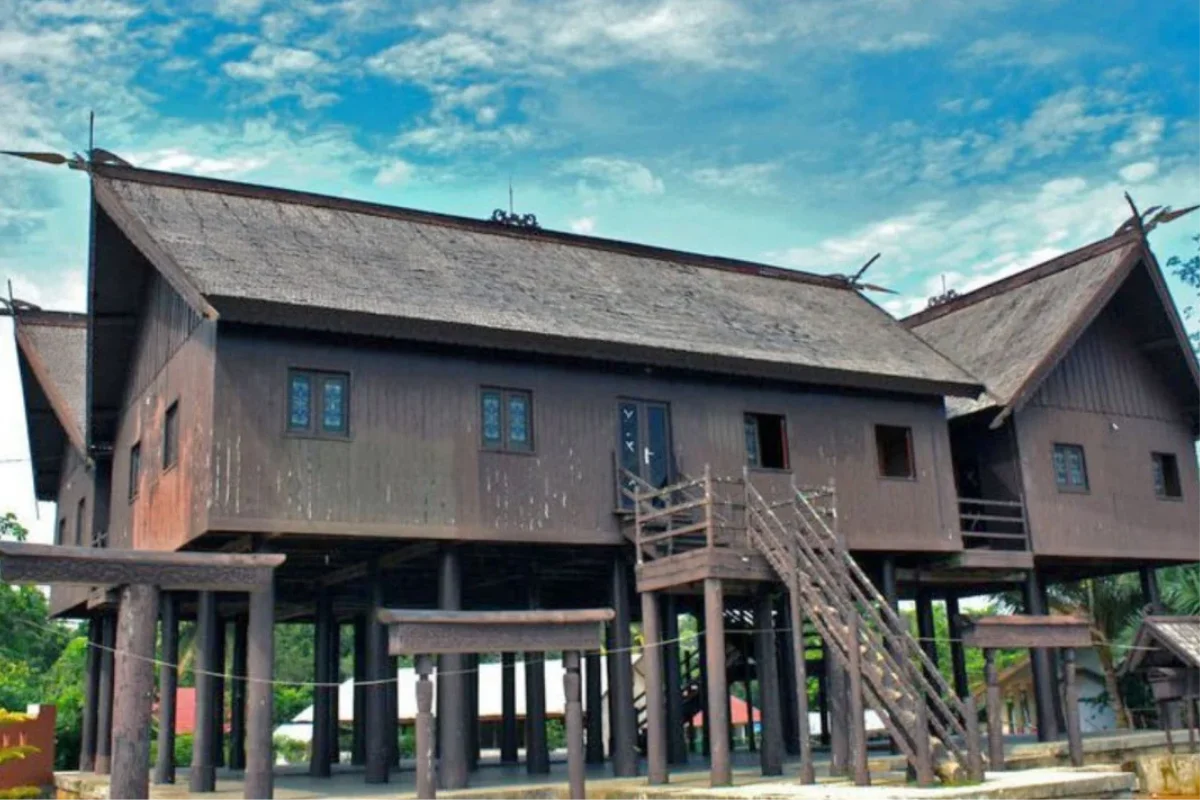
This island is shared among three Southeast Asian countries: Malaysia and Brunei in the north, and Indonesia in the south. Indonesia accounts for approximately 73% of the island's territory. In the north, the two Malaysian states of Sarawak and Sabah make up 26% of the land area. Additionally, the Malaysian federal territory of Labuan is located on a small island just off the coast of Borneo. The sovereign state of Brunei, situated in the north, comprises 1% of Borneo's total area. Borneo is home to one of the oldest rainforests in the world.

Tanjung Puting
Tanjung Puting is a national park located in Central Borneo. It is a place where you can see orangutans in their natural habitat. Spanning 415,040 hectares, it is considered a prime example of a vast and diverse protected forest. It encompasses several types of ecosystems, including lowland tropical rainforest, tropical heath forest (kerangas), freshwater swamp forest, peat swamp forest, mangrove forest, coastal forest, and secondary forest.
The forest is home to 38 types of mammals, 9 species of primates such as: orangutans, proboscis monkeys, macaques, etc. Approximately 230 species of birds inhabit Tanjung Puting. You can find hornbills, sandang lawe (Ciconia stormi), and many wetland birds. As for the vegetation, most of it consists of tropical heath forest flora, such as carnivorous plants.
Beyond its biodiversity, Tanjung Puting is crucial to the well-being of the local population. The wetland provides vital ecological services—such as flood control, flow regulation, erosion control, and natural biological filtration—and serves as a seasonal fish nursery, acting as a source of animal protein for local people. Furthermore, the national park benefits surrounding communities by providing products such as honey and wild rubber.
For these reasons, Tanjung Puting has become a vital treasure of Central Kalimantan province. The Indonesian government is committed to protecting it. Garden of Eden and its wild ecosystem. The preservation of orangutans in this region attracts many tourists every year.
Camp Leaky
Camp Leakey was established in 1971 by Dr. Biruté Galdikas. It was named after the famous paleoanthropologist Louis Leakey, who was Dr. Galdikas's mentor and inspiration. Originally consisting of just two cabins, Camp Leakey has become a base for researchers, staff, students, and forest rangers.
As an active research center, Camp Leaky is open to visitors accompanied by a local guide. To visit the reserve, you must obtain an official permit, check in with the rangers, observe the orangutans from a safe distance, and avoid disturbing the researchers conducting their work.
Orangutan
The name "orangutan" is derived from two words; "orang" means person The word "utan"—originally "hutan"—means forest. Therefore, the name "orangutan" signifies "person of the forest." This is because the orangutan is the primate most similar to humans. There are two places where you can find orangutans: Sumatra and Borneo (or Kalimantan). In Kalimantan, there are approximately 54,000 orangutans, including an endangered subspecies. Many efforts are being made to protect orangutans—whose numbers continue to decline due to deforestation—such as the establishment of conservation centers. Here is some information about this primate:
- The orangutan is the largest arboreal mammal in the world.
- A large male orangutan can weigh between 50 and 90 kg and reach a height of 1 to 1.5 meters, whereas a female can weigh 30 to 50 kg and reach a height of 1 meter.
- An orangutan can extend its arms up to 8 meters in length.
- During the first years of its life, a young orangutan will cling to its mother as she moves through the forest canopy.
- Orangutans live in lowland forests.
Source: varié
 English
 French